

Exploring Different Maple Tree Varieties: Identification, Care, and Best Choices for Landscaping
Maple trees (Acer genus) are a diverse group of deciduous and ornamental trees valued for shade, fall color, and distinctive samaras; this guide helps Orlando homeowners identify varieties, diagnose common problems, and choose species suited to Florida landscapes. Readers will learn how to recognize maples by leaves, bark, buds, and seeds, compare red, sugar, and Japanese maples, and follow practical maintenance steps tailored to Orlando’s climate. Many homeowners face uncertainty about which maple will thrive in heat and humidity, how to spot diseases like verticillium wilt or tar spot, and when professional tree work is needed; this article addresses those pain points with actionable guidance. Each H2 section explores species suitability, identification techniques, pests and diseases, pruning and care, direct red vs sugar comparisons, landscape-value choices, and focused advice for Japanese maples. The content integrates practical checklists, EAV comparison tables, and local service guidance where homeowners should consider certified arborist support, keeping coverage grounded in local Florida considerations and current research perspectives. By the end, you’ll be able to select, identify, and care for maples with confidence, and know when to request professional arborist help.
What Are the Most Popular Maple Tree Varieties for Florida Landscapes?
Maple varieties differ in heat tolerance, root behavior, and ornamental traits; choosing the right Acer for Orlando depends on mature size, growth rate, fall color, and site conditions. In Orlando landscapes, species that tolerate warm, humid summers and adapt to varied soils are preferred, while others with invasive roots or high cold requirements are less suitable. This section lists top species, highlights local suitability, and provides a compact species comparison table so homeowners can match tree attributes to yard needs. Understanding these differences reduces long-term maintenance and helps select maples that deliver shade without damaging infrastructure.
Which Maple Trees Thrive Best in Orlando’s Climate?
Several maple species and cultivars adapt well to Orlando’s USDA-equivalent warm zones by exhibiting moderate drought tolerance and manageable root systems. Red maple (Acer rubrum) performs reliably in Florida landscapes because many cultivars tolerate heat, produce fast shade, and exhibit variable fall color; planted with proper irrigation, it is a top local choice. Japanese maples (Acer palmatum cultivars) thrive in mulched, partially shaded microclimates and offer specimen-level ornamental value when sited away from afternoon sun. Choosing the right cultivar and planting location is essential to prevent heat stress and root conflicts with sidewalks or pools.
What Are the Key Features of Sugar Maple, Red Maple, and Japanese Maple?
Sugar maple (Acer saccharum) is known for exceptional fall color and syrup production but prefers cooler climates and may struggle with Florida heat, so it is less common in Orlando plantings. Red maple (Acer rubrum) is versatile, with distinctive toothed leaves, rapid growth, and good adaptability to Florida soils; it is widely used for canopy and shade. Japanese maple (Acer palmatum) is prized for its delicate, deeply lobed leaves and compact habit, offering intense ornamental interest in small yards or as specimen trees when provided shade and regular moisture.
Are There Other Notable Maple Varieties to Consider?
Homeowners seeking specific traits can consider silver maple, paperbark maple, Amur and Norway maples with caveats about roots, bark, or invasiveness. Silver maple grows rapidly and provides quick shade but can have invasive roots and brittle wood that leads to storm damage in humid climates. Paperbark maples offer attractive exfoliating bark and are often used as a focal specimen, whereas Amur and Norway maples provide cold-hardy alternatives that may not display the same fall color intensity in Florida. Selecting alternatives depends on landscape goals: quick shade, ornamental bark, or small-form specimens.
Which Maple Trees Are Invasive or Less Suitable for Florida?
Some maple species either behave invasively or perform poorly in Florida’s warm, humid conditions, making them poor choices for residential yards. Norway maple can outcompete native plants in some settings and has aggressive root systems that affect lawns and infrastructure, so localized restrictions often apply. Silver maple’s shallow, wide roots and brittle limbs increase maintenance and risk in storm-prone areas, reducing suitability for narrow urban lots. For homeowners who want maple traits without these downsides, red maple cultivars and many Japanese maple varieties are safer, lower-maintenance substitutes that balance shade and ornamental value.
| Species | Mature Size | Growth Rate | Fall Color | Suitability for Orlando |
|---|---|---|---|---|
| Red Maple (Acer rubrum) | 40–60 ft | Moderate to fast | Red to orange | Good; adaptable and heat-tolerant with cultivar choice |
| Sugar Maple (Acer saccharum) | 60–80 ft | Slow to moderate | Brilliant orange-red | Limited; prefers cooler climates, less heat tolerant |
| Japanese Maple (Acer palmatum) | 6–25 ft | Slow | Red, purple, or orange (varies) | Very good for shaded, mulched sites as specimens |
| Silver Maple (Acer saccharinum) | 50–70 ft | Fast | Yellow | Caution; invasive roots and brittle limbs reduce suitability |
This comparison highlights how cultivar selection and planting site determine success for maples in Orlando. Selecting species that match yard constraints and maintenance tolerance reduces long-term problems and improves landscape outcomes.
How Can You Identify Maple Trees by Their Leaves, Bark, and Seeds?
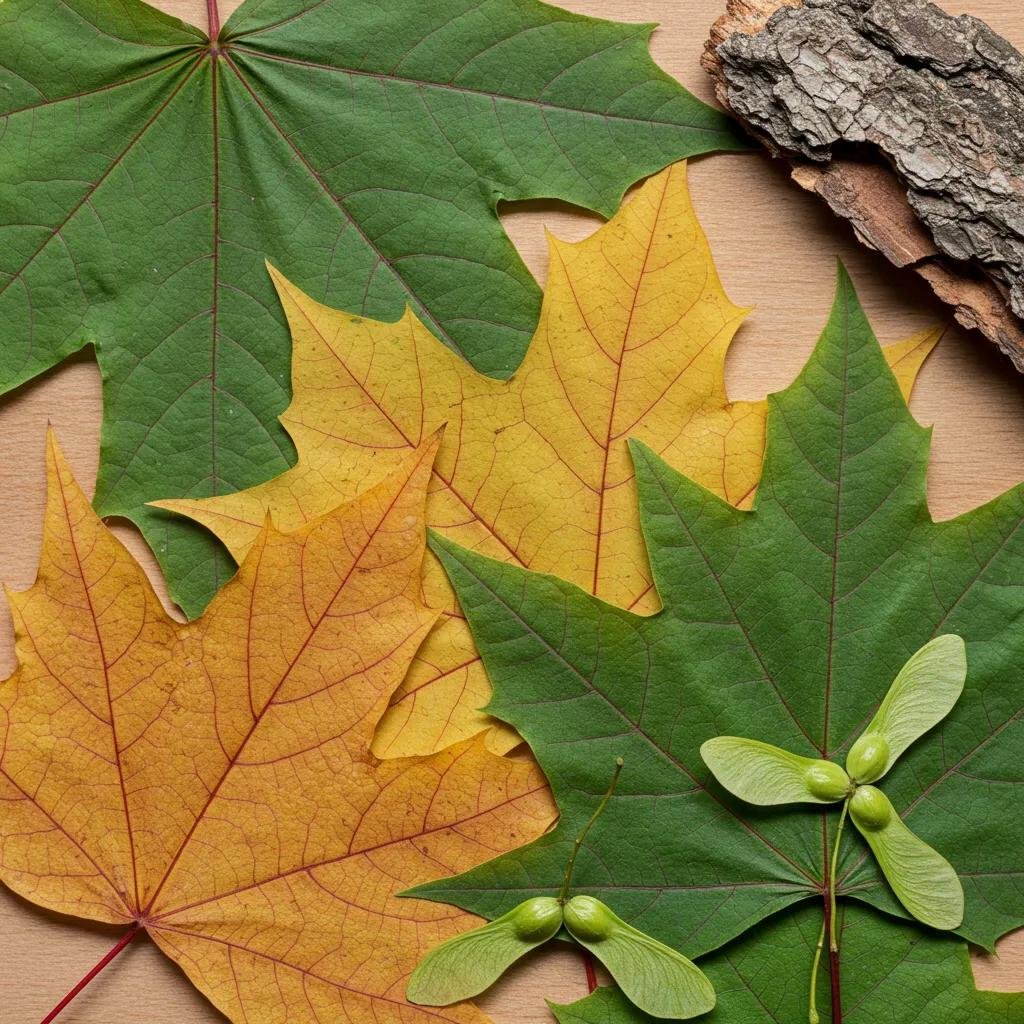
Maple identification relies on observable features: leaf shape and lobing, bark texture changes with age, paired winged seeds called samaras, and bud arrangement; together these traits create reliable species signatures. Practically, counting leaf lobes, examining sinuses, noting bark texture, and observing samara angles provide a quick field diagnosis that separates red, sugar, Japanese, and other maples. These morphological cues combined with seasonality—whether leaves turn color in fall or samaras mature in spring—give homeowners a robust identification toolkit. Accurate identification informs appropriate care choices like pruning timing and species-specific disease vigilance.
What Leaf Shapes and Colors Distinguish Different Maple Species?
Maple leaves vary from the deeply dissected palmate leaves of Japanese maples to the broader lobed leaves of sugar and red maples, with lobe count and sinus depth as primary ID markers. Red maples typically have three to five shallow lobes with serrated margins and variable fall color, while sugar maples have five distinct lobes with smoother margins and consistently vivid fall hues. Japanese maple cultivars often show finely cut or deeply divided leaves and a wide palette of leaf colors ranging from green to deep purple. Observing leaf margins, lobe shape, and fall coloration helps narrow species identification quickly.
How Does Bark Texture and Color Help Identify Maple Trees?
Bark features are diagnostic, evolving from smooth young bark to furrowed or exfoliating textures as trees mature, and some species display distinctive patterns like paperbark peeling. Paperbark maples show cinnamon-colored peeling bark, while mature sugar maples develop rough, blocky furrows useful for identification. Red maples often maintain relatively smoother bark at smaller sizes and develop flaky ridges as they age. Photographing bark and comparing to leaf-based ID cues provides a redundant check that confirms species before deciding on maintenance practices.
What Are Samaras and How Do They Aid in Maple Identification?
Samaras are paired, winged seeds unique in shape and orientation across species; the angle between wings, size, and timing of drop are practical identifiers for maples. Sugar maple samaras tend to have a narrower wing angle and ripen in late spring, while red maple samaras may be broader and disperse slightly earlier. Collecting samaras and noting their wing angle and seed size alongside leaf shape yields a more certain species ID. Homeowners can save samaras in labeled envelopes for cultivar tracking and to communicate observations with local arborists.
How Do Buds and Branching Patterns Differ Among Maple Varieties?
Bud color, shape, and arrangement along with branching habit—upright vs. spreading—help distinguish maple species, especially during leaf-off seasons. Sugar maple buds are typically smaller and more pointed, while red maple buds are often blunt and reddish, providing winter ID cues. Japanese maples often exhibit delicate branching and fine twig structure that supports their ornamental shapes. Recognizing these patterns aids pruning timing decisions and helps homeowners detect abnormal bud formation that might signal disease.
Maple ID cues form a compact checklist homeowners can use in the field:
- Leaf lobes and margins: Count lobes and inspect edges for serration or smoothness.
- Samaras: Note wing angle and seed size when present in spring.
- Bark texture: Compare young smooth bark with mature furrows or peeling.
- Bud shape and color: Inspect winter buds for species-specific traits.
Using this checklist improves planting decisions and guides maintenance timing based on the species identified.
What Are the Common Maple Tree Diseases and Pests in Orlando?
Maples in Orlando face several notable diseases and pests—Verticillium wilt, anthracnose, tar spot, and the invasive Asian longhorned beetle—and recognizing symptoms early allows timely cultural controls or professional intervention. Most problems begin with stress (drought, compacted soils) that predispose trees to pathogens and borers; preventive care reduces incidence. This section describes symptoms, immediate homeowner actions, and thresholds that indicate it is time to escalate to a certified arborist for diagnosis and treatment. An EAV table below serves as a quick reference for recognition and next steps.
| Problem | Symptom(s) | Likely Cause | Immediate Action | When to Call an Arborist |
|---|---|---|---|---|
| Verticillium Wilt | Wilting, branch dieback, asymmetric crown decline | Soil-borne fungus | Remove affected limbs, improve irrigation | If >10–20% crown decline or progressive dieback |
| Anthracnose | Irregular leaf blotches, premature leaf drop | Fungal spores in wet spring weather | Rake and destroy leaves, improve air flow | If defoliation repeats annually or tree weakens |
| Tar Spot | Round black lesions on leaves | Fungal pathogen favored by moisture | Rake infected litter, maintain tree vigor | For heavy yearly defoliation affecting growth |
| Asian Longhorned Beetle | Round exit holes, sawdust, branch dieback | Wood-boring beetle infestation | Isolate area and report sightings | Immediately upon suspected infestation for removal |
How Does Verticillium Wilt Affect Maple Trees and What Are Its Symptoms?
Verticillium wilt is a soil-borne fungal disease that clogs water-conducting tissues, producing wilting, leaf scorch, and progressive branch dieback; prognosis is poor once it spreads systemically. Early signs include one-sided canopy decline and yellowing leaves in otherwise healthy conditions, often beginning on individual limbs. Homeowners should prune out dead branches, improve root-zone conditions, and avoid further stress from drought or compaction to slow progression. If dieback exceeds a threshold or symptoms advance despite care, an arborist’s diagnosis and targeted mitigation plan are warranted.
What Is Anthracnose and How Can It Be Prevented or Treated?
Anthracnose causes irregular leaf lesions and can lead to substantial spring defoliation during cool, wet seasons; spores survive in fallen leaves and re-infect new growth. Cultural controls include sanitation—raking and removing leaf litter—and pruning to increase air circulation, which reduces surface moisture that favors the fungus. Fungicide applications can be effective in severe cases but should be applied based on professional recommendations and timing in spring budbreak. Repeated severe outbreaks justify consulting a certified arborist to assess long-term treatment and canopy management strategies.
What Are the Signs of Tar Spot on Maple Leaves?
Tar spot appears as round, raised black lesions on leaves and is mainly a cosmetic disease in most cases, though severe infestations reduce photosynthesis and vigor over time. It thrives in humid conditions; management focuses on sanitation by removing infected leaves and maintaining tree vigor through proper watering and fertilization. For light, occasional infections homeowners can choose to monitor rather than treat aggressively, but recurring heavy infections that affect growth merit professional assessment. An arborist can recommend integrated controls and evaluate whether canopy thinning or targeted treatments will protect long-term health.
How Does the Asian Longhorned Beetle Threaten Maple Trees?
The Asian longhorned beetle (ALB) bores into healthy wood, creating round exit holes and internal galleries that compromise structural integrity and can kill maples if left unchecked. Early detection includes spotting sawdust, entry/exit holes, dead branches, and sap flows near tunnels; rapid reporting and containment are crucial to prevent spread. ALB infestations typically require professional removal and disposal of affected trees to stop regional outbreaks. If you suspect ALB activity, contact a certified arborist immediately for inspection and coordinated removal to protect nearby trees.
When Should You Call an Arborist for Disease or Pest Treatment?
Professional intervention is recommended when symptoms indicate structural risk, progressive disease, or large-scale infestation beyond homeowner control; clear thresholds include substantial crown loss, repeated defoliation, and suspected wood-borer activity. An arborist provides diagnostic testing, targeted treatment plans, and safe removal when necessary, combining cultural controls, pruning, and in some cases, chemical treatment under professional standards. For Orlando homeowners, certified arborists also offer emergency response capabilities for sudden limb failure or rapid decline. In urgent or uncertain cases, seeking an arborist early often prevents loss of mature trees and reduces long-term costs.
Chilling and Heat Units Affecting Red and Freeman Maple Budbreak
ABSTRACT: AbstractListenThe effects of six levels of chilling (temp <7°C) on foliar budbreak of red maple(Acer rubrum)cultivars October Glory®and ‘Franksred’ (Red Sunset®) and Freeman maple (A.×freemanii) cultivar ‘Autumn Fantasy’ were evaluated in a study conducted from December 14, 1999, to April 7, 2000. October Glory had a greater minimum chilling hour requirement to initiate budbreak than ‘Autumn Fantasy’ and ‘Franksred’ (Red Sunset). However, once optimal chilling had been satisfied (near 600 hours), October Glory required fewer heat units than the other cultivars to reach 20% and 25% budbreak. For example, estimates for heat units required to reach 25% budbreak for October Glory were less than half that required for ‘Autumn Fantasy’ and ‘Franksred’ following 1,200 hours of chilling. Chilling was a determining factor in foliar budbreak for all cultivars, and with all three cultivars, increasing chilling produced greater budbreak percentages and the rate at which budbreak was initiated. All
Understanding the specific environmental triggers for budbreak, such as chilling and heat units, is crucial for predicting when different maple cultivars will leaf out, which can influence pest management and pruning schedules.
Orlando Tree Removal (Tree Service Near Me LLC) provides certified arborist diagnosis, targeted disease and pest treatments, and 24/7 emergency response for hazardous trees in the Greater Orlando area. Their teams can perform inspections, recommend treatment or removal, and execute mitigation with licensed and insured crews to restore safety and tree health quickly.
Common prevention steps reduce disease and pest incidence:
- Maintain healthy root zones with mulch and correct irrigation.
- Prune for structure and air flow, avoiding late-season heavy pruning.
- Sanitize by removing infected leaves and debris promptly.
What Are the Best Maple Tree Pruning and Maintenance Practices?
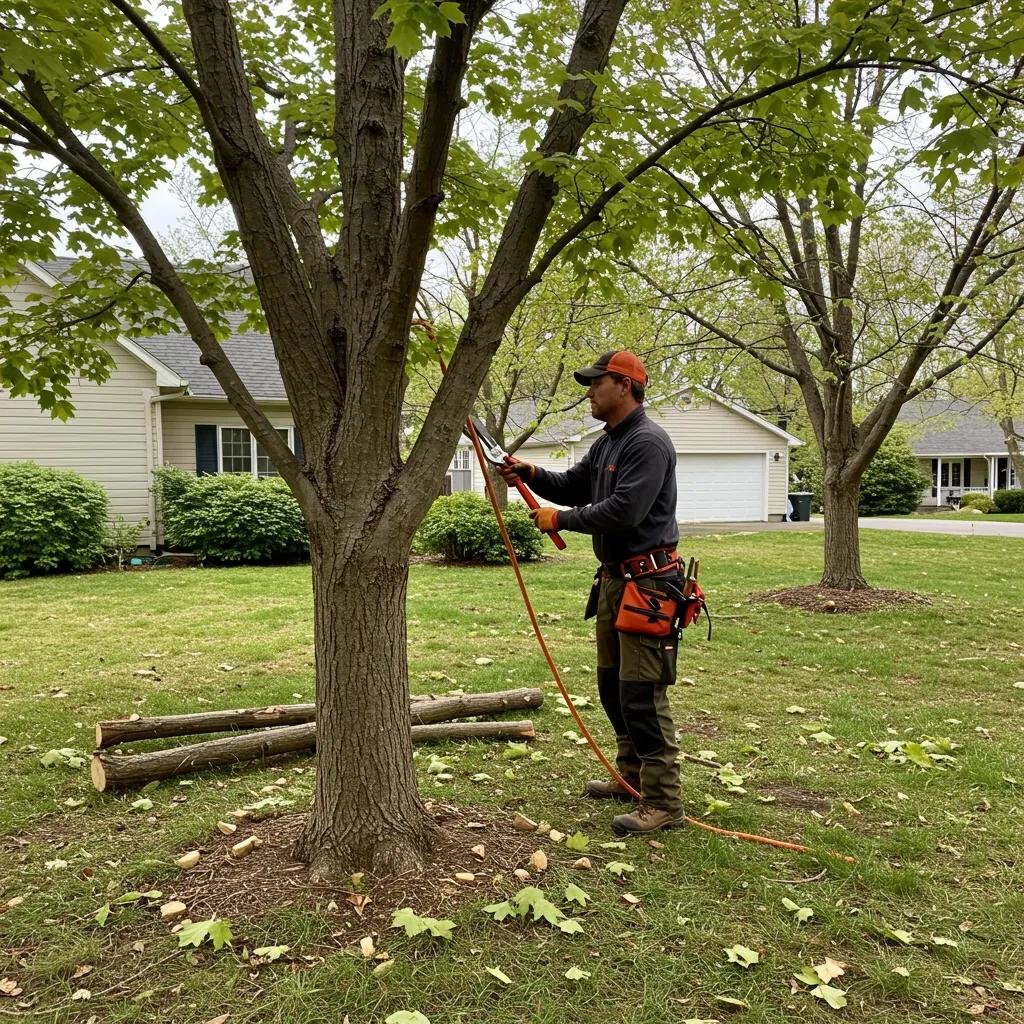
Appropriate pruning, watering, and fertilization keep maples resilient in Orlando’s climate and limit problems like storm damage, pest susceptibility, and poor form. Proper timing and technique—pruning for structure rather than heavy corrective cuts—support long-term health and reduce risk of decay. This section outlines seasonal maintenance, recommended techniques, and a concise maintenance schedule table to guide homeowners through year-round care tasks. Adopting a predictable program of simple actions reduces emergency needs and enhances landscape value.
When Is the Ideal Time to Prune Different Maple Varieties?
Seasonal timing matters: in Florida, late winter to early spring pruning minimizes bleeding and preserves canopy cover before summer stress, while removing deadwood can be done year-round as needed. Pruning during active growth can stimulate vigorous sucker formation; therefore structural pruning for form and safety is best in dormant or early leaf-out periods. For Japanese maples and ornamental cultivars, prune lightly in late winter and avoid heavy summer cuts that expose wood to sunscald. Always sterilize tools when pruning diseased branches to prevent pathogen spread.
What Pruning Techniques Promote Healthy Growth and Shape?
Healthy pruning emphasizes crown cleaning, selective thinning, and crown raising to remove competing or hazardous branches without over-thinning the canopy. Crown cleaning removes dead, diseased, or crossing branches to improve light penetration and reduce storm damage risk, while crown raising improves clearance for sidewalks or vehicles. Avoid topping, which creates weakly attached regrowth; instead use reduction cuts and prune to lateral branches that are at least one-third the diameter of the removed stem. Proper cuts, angled and made at branch collars, encourage compartmentalization and reduce decay entry.
How Should You Water and Fertilize Maple Trees in Florida?
Young maples require regular deep watering during establishment, while mature trees benefit from infrequent deep irrigation that encourages deeper root growth and drought resilience. Recommended fertilization begins with a soil test to target nutrient deficiencies; light, slow-release formulations applied in early spring support canopy development without promoting excessive soft growth. Mulch 2–4 inches deep away from the trunk conserves moisture, moderates soil temperature, and reduces weed competition. Avoid overwatering and high-nitrogen “quick growth” feeds that increase disease susceptibility and weak limb development.
What Winter Care Is Needed for Maples in Orlando’s Climate?
Winter in Orlando is mild; protective winter actions are minimal but important during cold snaps—apply extra mulch to root zones and protect young Japanese maples from radiational freezes with light coverings when frost is forecast. Monitor irrigation after dry winter periods and prune only as needed for structure to avoid unnecessary stress. Inspect trees after unusual cold events for sunscald or twig dieback and remove damaged wood in late winter to encourage healthy flushes. Maintaining overall vigor through proper summer care reduces winter vulnerability and accelerates recovery from freeze events.
| Maintenance Task | Best Timing | Expected Outcome |
|---|---|---|
| Structural pruning (cleaning, thinning) | Late winter / early spring | Improved safety and crown structure |
| Deep root watering | Early dry season and during heat spells | Drought resilience and deeper rooting |
| Mulching and soil care | Year-round (refresh annually) | Improved moisture retention and root health |
| Fertilization (after soil test) | Early spring | Balanced nutrition and steady growth |
Following these practices reduces emergency pruning needs and improves long-term tree stability. When tasks exceed homeowner capacity or involve hazardous limbs, professional pruning preserves safety and tree form.
Pruning choices vary by goal and tree condition; use the short checklist below to match task to desired outcome.
- Crown Cleaning: Remove dead and diseased wood to prevent decay spread and increase light penetration.
- Crown Thinning: Selectively remove branches to reduce wind sail and improve airflow without changing tree height.
- Crown Raising: Remove lower limbs to provide clearance for people and structures while maintaining canopy balance.
These targeted pruning actions, when applied correctly, support healthy growth and reduce storm-related failures while retaining the tree’s ornamental value.
How Do Red Maple and Sugar Maple Compare: Key Differences Explained?
Red and sugar maples share genus-level traits but differ in fall color consistency, growth rates, and syrup suitability; understanding these contrasts helps homeowners select species that match landscape and climate realities. Red maples are generally more adaptable to warm, variable soils and give reliable shade quickly, while sugar maples excel in cooler climates and syrup production but are less heat tolerant. This section provides a direct comparison of fall color, size, leaf and bark features, and the practical limitations of syrup production in southern climates. Choosing between them balances aesthetic goals with realistic maintenance and climate fit.
What Are the Differences in Fall Color Between Red and Sugar Maples?
Sugar maples typically deliver the most vivid, long-lasting oranges and reds in temperate climates, producing a predictable seasonal display when temperatures cool consistently. Red maples offer a wide range of fall hues—scarlet, orange, or yellow—often influenced by cultivar choice and local climate stressors, yielding variable but often impressive color in Florida. In Orlando’s mild winters, red maples generally show better color reliability than sugar maples, which may fade or show muted tones under heat stress. For homeowners prioritizing consistent fall color in warm climates, selected red maple cultivars often outperform sugar maples.
How Do Growth Rates and Mature Sizes Differ?
Red maples tend to grow faster and reach mature canopy sizes sooner than sugar maples, providing quicker shade and landscape impact. Sugar maples grow more slowly but can develop broader crowns and longer-lived timber in appropriate climates; however, in Orlando their growth can be stunted by heat and moisture conditions. Space planning should account for red maple root spread and canopy breadth while recognizing sugar maples may not reach textbook mature dimensions in Florida. Proper spacing and root-friendly planting reduce conflicts with hardscape regardless of species.
What Are the Distinct Leaf and Bark Characteristics?
Leaf morphology is a primary distinguishing feature: sugar maple leaves usually have five well-defined lobes with smooth margins, whereas red maples have three to five lobes with toothed margins. Bark on mature sugar maples becomes deeply furrowed and blocky, offering a textured trunk, while red maple bark tends to remain smoother at smaller sizes and becomes flaky or platy with age. These visual cues simplify in-field differentiation and help homeowners choose species based on desired trunk and canopy aesthetics.
Which Maple Is Better for Syrup Production and Why?
Sugar maples have the highest sap sugar concentration and are the preferred species for syrup production, while red maples contain lower sugar levels making them less suited for commercial tapping. In Florida’s warmer climate, both species yield lower sap volumes and sugar concentration compared with northern stands, limiting syrup viability for homeowners. For those interested in small-batch syruping as a hobby, tapping sugar maples in microclimates that mimic cooler conditions gives the best chance of success, but expectations should be modest in Orlando.
A compact comparison list clarifies practical differences:
- Red Maple: Faster growth, greater adaptability to Florida, variable fall color.
- Sugar Maple: Superior syrup sap, slower growth, prefers cooler climates.
- Practical choice: For Orlando yards seeking shade and color, red maple cultivars are often the pragmatic selection.
What Are the Best Maple Trees for Landscaping and Property Value?
Maples enhance curb appeal, provide cooling shade, and can raise perceived property value when healthy, well-placed specimens complement architecture and landscape design. The right maple selection balances size, root behavior, and ornamental traits to avoid future conflicts with foundations, driveways, or utility lines. This section outlines which varieties maximize ornamental or monetary value and explains how professional planting and pruning further protect landscape investment. Strategic placement and ongoing maintenance are key drivers of long-term value from maples.
How Do Maple Trees Enhance Orlando Home Landscapes?
Maples contribute shade that lowers outdoor and indoor temperatures, create seasonal interest through leaf color and samara displays, and serve as specimen or street trees that define property character. Mature maples can form focal points, structure garden rooms, and provide canopy that supports understory plantings by moderating sunlight and moisture. In Orlando, the cooling and aesthetic benefits are particularly valuable for outdoor living spaces and street appeal. Proper species choice and early training pruning ensure these benefits persist without costly corrective work.
Which Maple Varieties Offer the Best Shade and Ornamental Value?
For fast shade, selected red maple cultivars and some silver maples provide rapid canopy development, while paperbark and Japanese maples offer ornamental bark, color, and compact forms for small yards. Trade-offs include root invasiveness and structural brittleness that may reduce long-term value in certain species; heavy-rooted or brittle-limbed trees are less desirable near structures. A planting matrix that pairs expected mature size with maintenance needs helps homeowners pick species that maximize ornamental return without future hazards. Careful cultivar selection yields high visual impact with manageable upkeep.
How Does Proper Maple Tree Care Increase Property Value?
Healthy, well-maintained maples improve curb appeal, lower cooling costs through shade, and reduce liability by limiting storm-related limb failures—all factors that real estate appraisers and prospective buyers value. Professional maintenance such as formative pruning, risk mitigation, and pest/disease management preserves tree health and appearance, translating to measurable improvements in a property’s landscape value. Preventive care reduces the need for emergency removal or extensive corrective pruning, protecting both visual and structural landscape assets. Investing in early and regular care often yields a favorable return through enhanced aesthetics and reduced long-term maintenance costs.
After selecting desirable varieties and recognizing value drivers, many homeowners benefit from professional input; certified arborist consultation and targeted maintenance improve survival and landscape performance. Orlando Tree Removal (Tree Service Near Me LLC) offers certified arborist consultations, professional tree trimming, and hazard mitigation that help preserve property value while ensuring safety. Their services include pruning for structure, risk assessment, and removal when necessary, backed by licensed and insured crews to execute complex jobs safely and efficiently.
When Is Professional Tree Service Recommended for Maple Trees?
- Hazardous limbs over structures or high-traffic areas.
- Progressive disease signals, such as widespread dieback or fungal conks.
- Large pruning for canopy restructuring or correctable storm damage.
- Root conflicts causing sidewalk uplift or foundation concerns.
Orlando Tree Removal services commonly used include:
- Tree trimming and structural pruning to improve safety and form.
- Tree removal and stump grinding for hazardous or dead trees.
- Emergency response for storm-damaged and risky trees.
For homeowners concerned about a specific hazard or wanting a no-obligation inspection, scheduling a certified arborist consultation provides clarity on required work and available options.
Professional service triggers list summary:
- Immediate risk: Falling limbs or leaning trunks near structures.
- Health decline: Progressive dieback, severe pest signs, or trunk decay.
- Landscape projects: Major pruning, staged removals, or site clearing.
Proactive arborist involvement reduces liability and often lowers lifetime maintenance costs compared with reactive emergency interventions.
How Can You Identify and Care for Japanese Maple Varieties?
Japanese maples (Acer palmatum group) offer extraordinary ornamental diversity in leaf form, color, and habit but require special attention in Florida’s heat to thrive as specimen or understory trees. Recognizing popular cultivars and their light and moisture needs helps homeowners site and care for these trees to minimize sunscald and heat stress. This section lists key cultivars, identification cues, and targeted care practices including mulching, shade management, and delicate pruning techniques. Where precision shaping or disease monitoring is needed, certified arborists can provide specialized maintenance that preserves delicate form.
What Are the Most Popular Japanese Maple Cultivars?
Popular cultivars for Florida landscapes include smaller, heat-tolerant forms chosen for leaf color and habit; many cultivars emphasize burgundy or laceleaf forms that perform well in shaded microclimates. Cultivar selection depends on siting—upright cultivars fit narrow spaces while weeping or laceleaf types suit sheltered, specimen locations. Choosing cultivars with proven heat tolerance and matching them to protected, mulched planting sites reduces transplant shock and sunscald. For planting in small yards, compact cultivars offer the most ornamental value with minimal maintenance.
How Do You Recognize Japanese Maple Leaves and Growth Habits?
Japanese maples typically have palmate leaves with 5–9 slender lobes and often show finely cut or lace-like forms in many cultivars; leaf color ranges widely from chartreuse to deep burgundy. Growth habits range from compact mounds to multi-stemmed weeping forms, and twig structure is generally delicate compared with larger Acer species. Noting leaf division, size, and color along with branching habit distinguishes Japanese maples from coarser maple relatives. These identification cues guide care: delicate twigs require thoughtful pruning and protection from heavy ice or wind.
What Special Care Does Japanese Maple Require in Florida?
Japanese maples need partial shade from intense afternoon sun, consistent moisture without waterlogging, and a well-draining, organically rich soil profile supplemented with mulch for root insulation. Protect young saplings from hot western exposures and provide filtered light to reduce leaf scorch; during high-heat periods, increase irrigation frequency while ensuring good drainage to avoid root rot. Transplant in spring or early fall when temperatures moderate and avoid heavy fertilization that promotes weak, succulent growth prone to heat damage. Regular monitoring for pests and fungal disease ensures early treatment and preserves ornamental value.
How Can Certified Arborists Help Maintain Japanese Maples?
Certified arborists bring specialized pruning techniques, structural training, and pest/disease monitoring tailored to delicate Japanese maples, preserving form without over-pruning. Arborists understand microclimate adjustments—recommendations for shade cloth, mulching depth, and irrigation tuning—that prevent heat stress and sunscald while maintaining aesthetic shape. For homeowners seeking precision shaping or recovery from stress, professional pruning avoids common mistakes like over-thinning or topping that damage long-term form. Orlando Tree Removal’s certified arborists can schedule targeted maintenance and provide consultation on cultivar selection, protective measures, and ongoing care to keep Japanese maples thriving.
Japanese maples benefit from both careful homeowner maintenance and occasional professional tuning; combining the two produces the best long-term ornamental results. Orlando Tree Removal (Tree Service Near Me LLC) offers certified arborist consultations, delicate pruning, and monitoring services that preserve specimen trees while mitigating local stressors, backed by licensed, insured crews and a satisfaction-focused approach.
- Site assessment and cultivar matching: Ensures the chosen Japanese maple fits the microclimate and planting conditions.
- Delicate structural pruning: Performed with attention to form and branch union integrity.
- Ongoing monitoring: Prevents pests and manages heat-related stress proactively.
These combined actions help Japanese maples deliver maximum ornamental value with minimal risk.