

Identifying and Treating Girdling Roots in Trees: Symptoms, Causes, and Professional Solutions
Girdling roots occur when roots grow around a tree’s trunk or other roots, constricting the root collar and reducing the flow of water and nutrients; understanding this process helps homeowners protect tree health and property. This guide explains what girdling roots are, how they damage trees biologically and mechanically, and why early diagnosis matters for longevity and safety. You will learn to recognize visual and growth symptoms, discover common causes linked to planting and soil management, and follow prevention and treatment options ranging from careful root pruning to removal when necessary. The article also covers professional diagnostic techniques such as root collar excavation and air spading, practical tools and timelines for recovery, and local cost considerations for Orlando homeowners. Read on to get clear, actionable steps for spotting girdling root symptoms, preventing recurrence, and deciding when to call a certified arborist for a targeted assessment.
What Are Girdling Roots and How Do They Affect Tree Health?
Girdling roots are roots that wrap around a trunk or other roots and constrict the cambium layer, which reduces water and carbohydrate transport and weakens the tree structurally. This mechanical compression gradually causes canopy thinning, slowed growth, and increased susceptibility to pests and disease as the tree’s vascular connections are interrupted. Recognizing the biological mechanism—physical strangulation of phloem and xylem—helps prioritize remedial actions that restore root collar function or remove hazardous trees before failure occurs. The next subsections describe the definition, species vulnerability, and the specific ways girdling roots reduce growth and stability, which sets up guidance on symptom detection and mitigation.
What Are Girdling Roots?
Girdling roots are lateral or adventitious roots that encircle the trunk or larger roots, acting like a constricting band that interferes with vascular flow and root anchorage. The mechanism combines mechanical pressure and secondary growth: as roots thicken they compress the trunk’s cambium, which impairs xylem and phloem transport and starves the crown over time. Early-stage girdling may only slow growth and reduce leaf size, but chronic girdling produces branch dieback and structural instability as root flare is lost. Recognizing this anatomical pattern—root encirclement and absent root flare—allows homeowners to plan targeted excavation or professional diagnosis that can reverse damage if caught in time.
Practitioner’s Guide to Stem Girdling Roots in Trees
A practitioner’s guide to stem girdling roots of trees
A practitioner’s guide to stem girdling roots of trees, R Hauer, 2000
Which Tree Species Are Most Prone to Girdling Roots?
Certain urban tree species and transplant stocks show higher incidence of girdling roots because of root architecture and nursery handling practices; common vulnerable types in urban landscapes include many maples, oaks, lindens, and some ornamentals transplanted from containers. Trees grown in containers often develop circling roots that become girdling roots later, while species with shallow, fibrous root systems are more likely to encircle trunks under compacted soil or deep planting. Local planting choices and transplant techniques influence susceptibility, so selecting species with robust, non-circling root habits and proper planting protocols reduces long-term risk. Understanding species vulnerability leads directly into spot-checking for the most common external symptoms described next.
How Do Girdling Roots Impact Tree Growth and Stability?
Girdling roots reduce radial growth and nutrient flow, which manifests as canopy thinning, stunted shoot growth, and reduced leaf size, and they also compromise anchorage by altering the distribution of main structural roots. As vascular flow is restricted, the crown becomes stressed and more prone to secondary problems like dieback, decay, and pest invasion; structurally, encircling roots reduce the effective root plate and increase risk of uprooting in storms. These biological and mechanical effects create both aesthetic decline and public safety hazards, especially for mature trees near structures or traffic. Appreciating these combined impacts makes it clear why timely diagnosis and a considered treatment plan are essential to preserve tree health and reduce liability.
What Are the Common Symptoms of Girdling Roots in Trees?
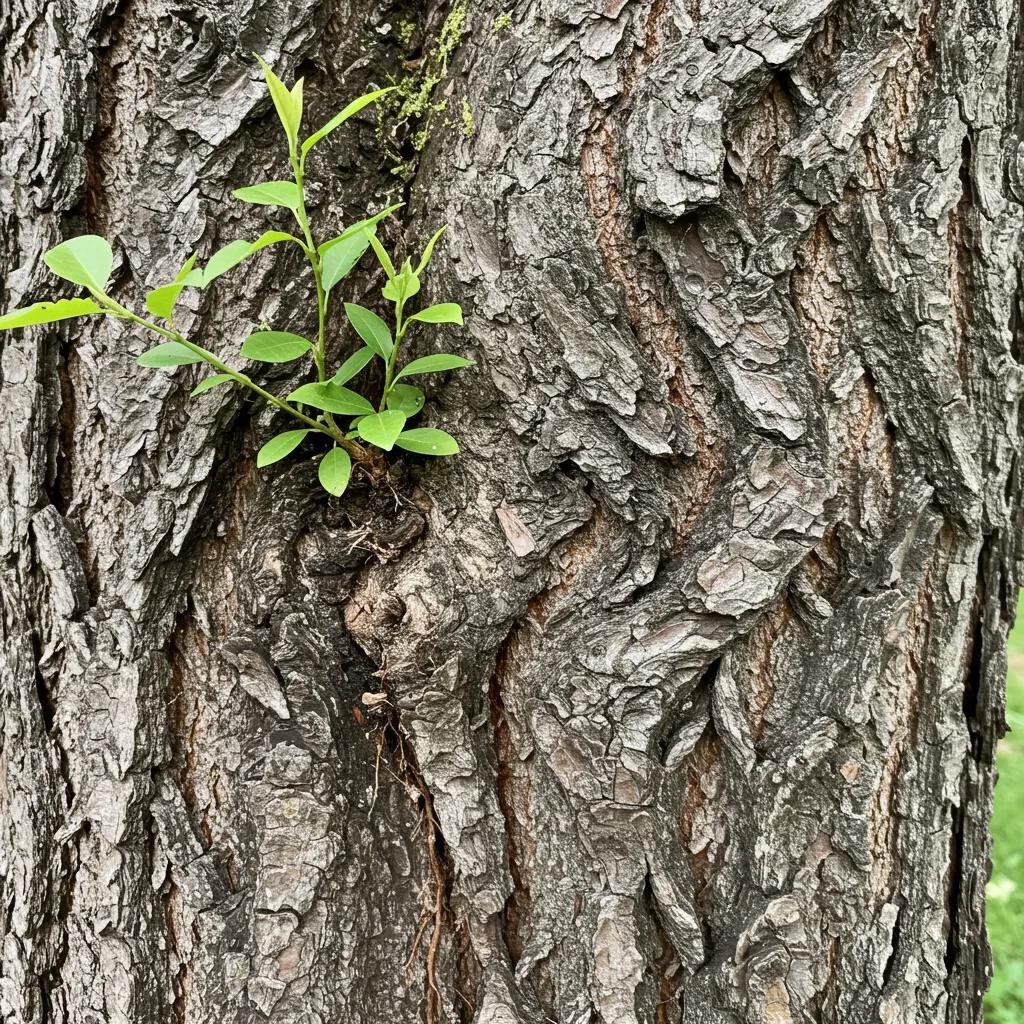
Homeowners can identify girdling roots by observing several repeatable visual and growth patterns that indicate impaired root flare and vascular flow. Common symptoms include canopy thinning, unusually small leaves, progressive branch dieback, trunk lean, and visible lack of root collar flare at the trunk base; these signs point to restricted root function and justify further inspection. Early detection is critical because intervention like targeted root pruning or excavation is most effective before extensive vascular damage occurs. The following symptom checklist pairs visual cues with homeowner actions to help prioritize whether to monitor or seek professional assessment.
Girdling root symptoms often begin subtly but progress predictably, linking visual decline to underlying root dysfunction and informing the urgency of treatment.
- Common signs of girdling roots include reduced leaf size and pale foliage that indicate nutrient and water flow limitations.
- Progressive canopy thinning and branch dieback signal worsening vascular restriction and a need for intervention.
- Trunk lean or poor root flare at the base suggests structural compromise and elevated failure risk.
These observable symptoms should prompt documentation and measurement so a certified arborist can assess whether excavation or targeted pruning will restore root function.
| Symptom | Visual Cue | Homeowner Action |
|---|---|---|
| Thin canopy | Sparse foliage, light penetration through crown | Photograph annually and note progression; schedule inspection if worsening |
| Small leaves | Leaves smaller than species norm for multiple seasons | Compare to nearby healthy specimens; flag for assessment |
| Branch dieback | Dead branch tips, increasing over time | Prune hazardous limbs and consult arborist for root evaluation |
| Trunk lean | Noticeable tilt from vertical over months | Avoid grading near trunk; call professional for stability assessment |
| Lack of root collar flare | Trunk narrows into soil without visible flare | Gently remove surface mulch to inspect flare; do not dig aggressively |
This table helps homeowners match symptoms to practical next steps and supports decisions about monitoring versus immediate professional intervention.
How to Recognize Visual Signs Like Thin Canopy and Small Leaves
Thin canopy and reduced leaf size are early aboveground indicators that root function has been compromised and that the tree is struggling to supply distal tissues with water and sugars. Thin crowns often appear first in one sector of the tree before spreading, and leaf miniaturization—leaves smaller than typical for the species—reflects chronic carbohydrate limitation. Homeowners should photograph affected areas across seasons and compare to healthy specimens to establish a baseline, then prepare for subsurface inspection if decline advances. Systematic documentation accelerates professional diagnosis and helps arborists map the likely extent of root constriction.
What Are the Early Warning Signs: Leaf Drop, Branch Dieback, and Leaning Trunks?
Early warning signs progress from sporadic leaf drop and marginal dieback to larger areas of branch mortality and a measurable trunk lean as structural support weakens. Leaf drop outside the normal seasonal schedule, combined with tip dieback, is often the first clear symptom for many species; if observed, it signals reduced transport and root stress. A leaning trunk usually indicates asymmetric root development or loss of anchorage and requires faster action to assess root plate integrity and public safety. Recognizing the sequence from subtle foliar symptoms to structural signs helps prioritize excavation or professional evaluation before catastrophic failure.
Why Is Lack of Root Collar Flare a Key Indicator?
Root collar flare is the visual junction where large structural roots spread from the trunk; its absence often means the tree was planted too deep or has circling roots that will girdle over time. A missing flare concentrates mechanical stress and masks underlying root problems that only become apparent when aboveground symptoms appear. Homeowners can safely inspect by removing excess mulch and looking for the natural widening at the tree base; if flare is obscured by soil or a mulch volcano, corrective action at planting is needed. Identifying a poor root collar early enables corrective measures like root collar excavation that directly address the anatomical cause of girdling.
What Causes Girdling Roots and How Can They Be Prevented?
Girdling roots commonly arise from improper nursery or planting practices, including container-grown trees with circling roots, trees planted too deep, or root-bound stock left uncorrected at transplanting. Soil compaction, excessive or volcano-style mulching, and restricted rooting space in urban sites encourage roots to grow laterally and circle rather than radiate, increasing the chance they will encircle the trunk. Prevention centers on correct planting depth, ensuring visible root flare, and alleviating compaction through aeration or structural soil solutions where feasible. The following actionable checklist outlines planting and maintenance steps homeowners and landscapers should follow to prevent girdling roots.
Preventive measures reduce long-term management costs and lower the likelihood of hazardous tree failures by promoting healthy structural root systems.
- Inspect root flare before planting and set the root collar at or slightly above final grade to ensure natural flaring.
- Loosen circling roots on container stock and cut or spread roots to encourage outward growth before backfilling.
- Apply mulch in a shallow donut, keeping mulch 2–3 inches deep and away from direct trunk contact to prevent soil buildup.
- Avoid soil compaction near the root zone by limiting heavy equipment and using aeration or structural soil where needed.
Taken together, these steps create a site and planting environment that favors radial root development and reduces the long-term risk of girdling.
How Does Improper Planting Lead to Girdling Roots?
Improper planting—especially burying the root collar too deeply or failing to address circling roots—forces roots to search for oxygen and nutrients in shallow layers and often to grow around the trunk. Container-grown trees that are not corrected at planting retain circling roots that become fixed as they thicken, forming true girdling roots over time. This mechanical process is compounded by subsequent soil or mulch buildup that further buries the root collar and accelerates encirclement. Addressing these errors at planting prevents the anatomical conditions that produce girdling roots, linking planting technique directly to long-term tree health.
Response of Plants to Root Pruning and Girdling
girdling the trunk with lead just above the roots to encourage
Response of plants to root pruning, 1984
What Role Do Soil Compaction and Deep Mulching Play?
Soil compaction reduces pore space and oxygen availability, encouraging roots to remain near the surface and promoting lateral, circling growth patterns that can encircle other roots or the trunk. Deep or volcano-style mulching raises the soil line and buries the root collar, obscuring flare and creating an environment where roots form just under the mulch layer and circle as they thicken. Aeration, reduced surface traffic, and proper mulch application reduce these drivers by restoring oxygen diffusion and keeping the root collar exposed. Correcting compaction and mulch problems is therefore a core prevention strategy that complements correct planting depth.
How Can Proper Planting Techniques Prevent Girdling Roots?
Correct planting creates the physical conditions that direct roots outward instead of around the trunk: set the root flare at or slightly above grade, remove excessive soil from the root ball, and modify tight root systems by loosening or pruning circling roots. Use a planting pit wide enough to allow lateral roots to expand, backfill with native soil, and avoid forming a root-binding pot shape. After planting, maintain a shallow mulch donut and monitor for soil buildup over time. These steps form a predictable, repeatable method that prevents girdling roots from developing and improves long-term stability.
What Are Best Practices for Root Ball Preparation and Mulching?
Root ball preparation for container trees includes loosening the root mass, cutting tight circling roots and scoring the root ball to stimulate radial root growth, and ensuring the top roots sit at the correct depth relative to the root collar. When mulching, apply a 2–3 inch layer in a donut shape that keeps mulch several inches away from direct trunk contact to prevent rot and root collar burial. Avoid excessive backfill soil that raises the planting depth, and consider root barriers or structural soil in confined urban sites to guide roots outward. These practical measures help seedlings and transplants establish healthy structural roots and limit the conditions that produce girdling roots.
How Are Girdling Roots Diagnosed by Certified Arborists?
Certified arborists diagnose girdling roots using targeted, minimally invasive methods that reveal root architecture while preserving root health, such as root collar excavation and air spading. Root collar excavation exposes the flare and the arrangement of structural roots so arborists can directly see circling or encircling roots; air spading uses compressed air to remove soil gently and reveal roots without excessive damage. These diagnostic approaches allow arborists to assess vascular damage, determine whether targeted pruning or removal is required, and develop a safe remediation plan. The next subsections explain root collar excavation, air spading advantages, and practical triggers for calling an Orlando arborist.
Professional diagnosis informs treatment choice—knowing whether girdling is superficial or has caused irreversible vascular girdling determines whether pruning or removal is appropriate.
What Is Root Collar Excavation and Why Is It Important?
Root collar excavation is the careful exposure of the tree’s root collar to inspect for circling roots, buried flare, and structural root defects; it is both diagnostic and often therapeutic because it identifies the exact location and extent of encircling roots. The process typically involves hand tools, small pneumatic tools, or an air spade to avoid severing critical roots unnecessarily, and it reveals whether root pruning can restore collar function or if more extensive action is required. Excavation clarifies the relationship between roots and trunk cambium so an arborist can make evidence-based decisions about pruning, staging, or removal. Proper excavation reduces guesswork and prevents unnecessary or harmful interventions.
How Does Air Spading Help in Diagnosing Root Problems?
An air spade directs compressed air to remove soil without cutting roots, quickly exposing root structure while minimizing damage to fine roots and surrounding soil structure. Compared to manual digging, air spading is faster, reduces the chance of injuring major roots, and provides a clearer view of root flare and any girdling patterns. This tool enables arborists to map root distribution and plan precise root pruning or stabilization measures, particularly in compacted urban soils. The minimal invasiveness of air spading makes it a preferred method for diagnosing suspected girdling roots and planning conservative, tree-preserving treatments.
When Should You Call an Orlando Arborist for Girdling Root Assessment?
Call a certified arborist when you observe progressive canopy decline, persistent small leaves, new trunk lean, or visible lack of root collar flare—especially for mature or high-value trees near structures. Immediate assessment is warranted if you see sudden branch failure, exposed roots after grading, or if root symptoms coincide with construction or soil changes; these scenarios increase risk and may require urgent stabilization or removal. Early professional assessment prevents misdiagnosis and reduces the likelihood of irreversible damage, and a certified arborist can recommend excavation, staged pruning, or removal based on direct inspection. If in Orlando you need an assessment, arranging an arborist inspection early increases the chances of saving the tree.
Orlando Tree Services offers certified arborist inspections that include root collar excavation and air spade diagnosis to determine the extent of girdling and recommend a tailored treatment plan. Their arborist consultation identifies whether targeted root pruning, staged removal, or full tree removal best protects tree health and property; homeowners are encouraged to request an assessment when early symptoms appear so remedial measures can be scheduled promptly.
What Are the Effective Treatments for Girdling Roots?
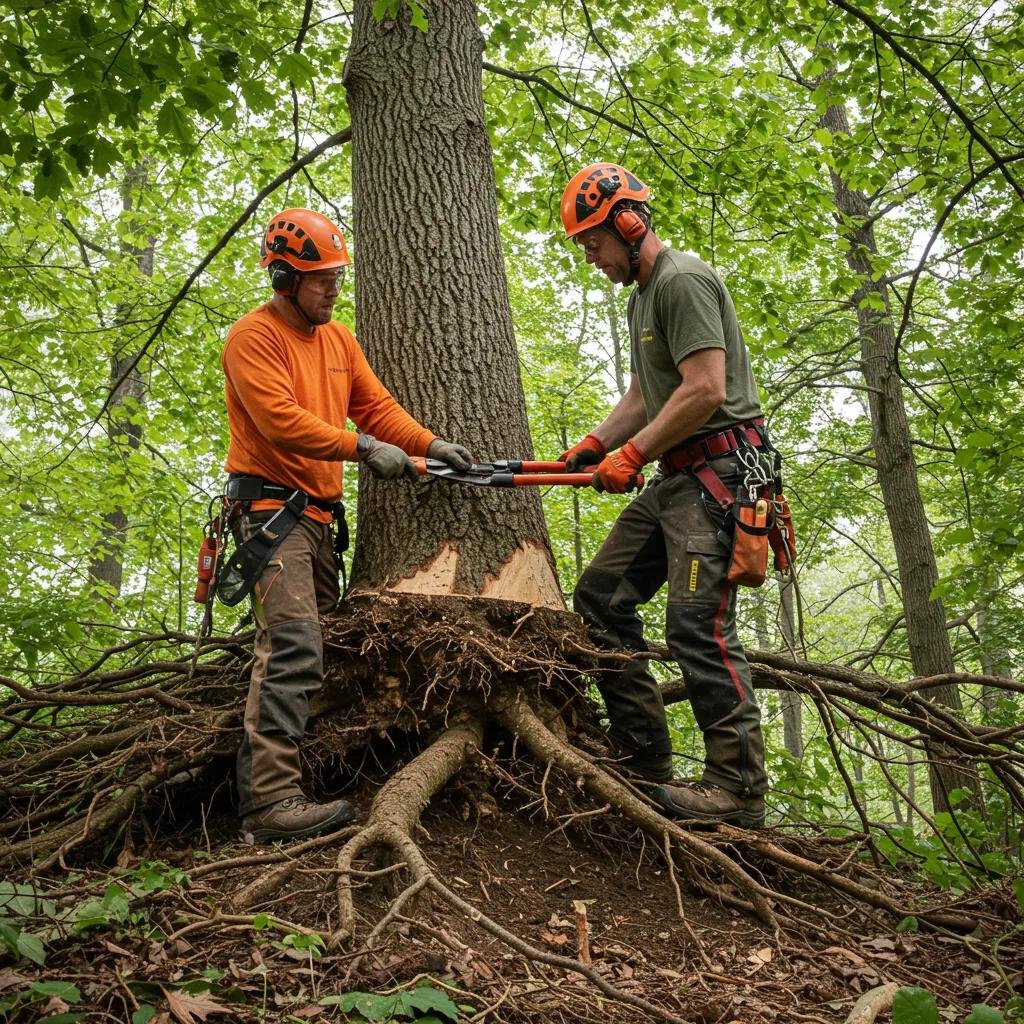
Effective treatments range from conservative, targeted root pruning to staged removal of problematic roots and, when necessary, full tree removal if vascular damage or structural risk is severe. Treatment choice depends on tree size, species, severity of encirclement, and presence of decay or significant cambial damage; staged pruning preserves as much root support as possible while relieving constriction. Tools and techniques include careful hand pruning, root saws for larger roots, and air spade-assisted exposure to minimize collateral injury. The following table compares common treatments, when to use them, and expected outcomes to help homeowners understand trade-offs.
Choosing the correct treatment balances restoring root collar function and maintaining structural stability while minimizing stress to the tree.
| Treatment | When/Size/Tools | Expected Outcome / Timeframe |
|---|---|---|
| Minor root pruning | Small roots, early girdling; hand saws, root pruning tools | Reduced constriction; canopy recovery in 1–3 seasons |
| Air spade + pruning | Moderate girdling, unclear extent; air spade, root saws | Precise removal of encircling roots; recovery over multiple seasons |
| Staged root removal | Large roots where single cut would destabilize tree; phased cuts over months | Maintains anchorage while relieving pressure; requires monitoring |
| Full tree removal | Extensive vascular damage, severe structural risk | Immediate risk elimination; site restoration follows removal |
This comparison clarifies expected benefits and timeframes so homeowners can weigh conservative repair against removal when safety or irreversible damage is present.
How Is Root Pruning and Removal Performed Safely?
Safe root pruning follows a staged, conservative approach: excavate to locate encircling roots, remove only the portion necessary to restore flare, and phase cuts for large roots to avoid sudden loss of anchorage. Arborists protect the root collar and fine roots, prune with sterile, sharp tools to avoid tearing, and follow up with mulching and soil amelioration to promote regeneration. Post-pruning care includes monitoring for stress symptoms, targeted watering during establishment, and follow-up inspections to assess recovery. Emphasizing safety and staged methods reduces the risk of destabilizing the tree while allowing vascular recovery.
What Tools and Techniques Are Used for Girdling Root Removal?
Common tools include air spades for safe soil removal, sharp root saws and chisels for larger roots, and hand pruners for fine roots; technique selection depends on root size and site constraints. Air spading allows precise exposure, root saws enable controlled cuts on woody roots, and staged notching or gradual removal protects structural stability. Operator training matters: technicians should understand root biology and biomechanics to choose the correct sequence of cuts. Proper tool use combined with arboricultural judgment maximizes the chance of successful recovery while minimizing tree stress.
When Is Full Tree Removal Necessary Due to Severe Girdling?
Full tree removal becomes necessary when girdling has caused extensive vascular death, large-scale decay, or when root loss would create an immediate risk of failure that cannot be mitigated through pruning or support. Indicators include large sections of trunk decay, symmetrically poor root plate, or severe trunk instability that threatens people or structures. When removal is selected, arborists consider safe felling methods, stump management, and site restoration to reduce future root problems. In high-risk scenarios, removal is the responsible choice to protect safety and property.
Orlando Tree Services performs targeted treatments including staged root pruning and full tree removal when warranted; their team emphasizes licensed, insured operations, certified arborists, and experienced crews using modern equipment to execute complex root work safely. Homeowners choosing professional intervention benefit from the company’s emphasis on safety protocols, transparent assessments, and equipment suited for air spading and controlled root removal.
How Long Does Tree Recovery Take After Treatment?
Recovery timelines vary by species, pruning extent, season, and site conditions, but many trees show measurable canopy improvement 1–3 growing seasons after successful root correction. Younger or fast-growing species may recover more quickly, while mature trees with chronic girdling need longer monitoring and possibly supplemental care like fertilization or root-zone improvement. Follow-up inspections at 6–12 month intervals help track progress and detect secondary issues early. Patience and regular monitoring are essential to confirm that root function and crown vigor have been restored.
How Much Does Girdling Root Treatment Cost in Orlando?
Costs for girdling root treatment in Orlando depend on multiple factors including tree size (DBH), severity of girdling, site accessibility, and equipment needs such as air spading or crane-assisted removal for large trees. Because each case requires an individualized assessment, providing a price range without inspection risks misleading homeowners; instead, understanding cost drivers helps estimate likely expense. Below is a cost-factor table that pairs each driver with its impact to help homeowners prepare for quotes and compare proposals.
Transparent cost discussions help homeowners set realistic budgets and evaluate proposals on technical merit rather than price alone.
| Cost Factor | Impact on Price | Typical Notes / Range |
|---|---|---|
| Tree size / DBH | High | Larger trunks require more labor and may need staged removal; increases cost substantially |
| Severity of girdling | High | Extensive girdling requires more excavation, possible removal; raises labor and equipment needs |
| Accessibility | Medium | Tight yards or overhead obstacles increase labor/time and may require special equipment |
| Equipment required | Medium–High | Air spade use and specialized root saws add to cost compared to hand excavation |
| Disposal & permits | Low–Medium | Debris removal and any necessary permitting can add modest charges |
What Factors Influence the Cost of Girdling Root Removal?
Key cost drivers are tree size and canopy spread, the extent and depth of girdling, whether air spading or staged removal is required, and site logistics including access and nearby structures. Larger, severely girdled trees often need multi-person crews, specialized equipment, and extended monitoring, which increases labor and equipment costs. Homeowners should request an itemized assessment that explains recommended steps and associated costs rather than accepting flat estimates. A clear scope aligned to diagnostic findings yields the most reliable price and avoids surprises during work.
How Does Orlando Tree Services’ Price Match Guarantee Work?
Orlando Tree Services advertises a Price Match Guarantee and transparent pricing as part of their homeowner value proposition, positioning this policy as a way to help residents obtain competitive quotes while maintaining professional standards. The guarantee acts as a trust signal for homeowners comparing estimates, and when paired with licensed, insured crews and certified arborists, it supports value-based decisions rather than lowest-cost choices. Homeowners should request a written quote and ask about specific guarantee terms during the consultation to confirm applicability.
What Are the Benefits of Choosing Licensed and Insured Arborists?
Licensed and insured arborists provide liability protection, adherence to industry best practices, and assurance that complex root work follows safety and environmental standards. Insurance limits exposure for homeowners in case of accidental damage, and licensing or certification ensures technicians have training in risk assessment, pruning standards, and safe equipment use. Selecting professionals who use modern diagnostic methods reduces the chance of misapplied treatments and increases the probability of tree recovery. Investing in qualified arboricultural services protects both trees and property while delivering measurable outcomes.
What Are the Most Frequently Asked Questions About Girdling Roots?
This FAQ section provides concise, actionable answers to common homeowner questions about identification, repair, recovery, prevention, and DIY versus professional intervention. Each answer gives a short procedural or decision-making response and directs homeowners to professional help for complex or high-risk situations. The brief Q&A format targets quick clarification so readers can decide whether to monitor or call an arborist.
What Are the Signs of Girdling Roots?
Girdling root signs include a thinning canopy, smaller-than-normal leaves, progressive branch dieback, visible trunk lean, and an absent or buried root collar flare; these signs collectively indicate restricted vascular flow and structural risk. Early symptoms like leaf-size reduction and localized dieback may allow conservative intervention, while trunk lean and widespread dieback suggest a need for immediate professional assessment. Homeowners should photograph and monitor symptoms, then schedule a diagnostic excavation if problems persist. Timely action improves chances of recovery and reduces hazard risk.
How Do You Fix Girdling Roots?
Fixing girdling roots follows a stepwise protocol: expose the root collar through careful excavation, assess the extent of encirclement and cambial damage, remove or prune encircling roots conservatively (staged when large), and restore soil and mulch to appropriate depth while providing follow-up care. For small trees with early girdling, corrective pruning and mulch correction often suffice; for larger trees, air spading and staged cuts protect anchorage during recovery. Professional involvement is recommended for mature trees or when major roots are involved to avoid destabilizing the tree.
Can a Tree Recover from Girdling Roots?
Many trees recover from girdling when the problem is diagnosed early and treated properly; recovery depends on species, severity of vascular damage, and quality of follow-up care. Trees with limited girdling typically recover canopy health over 1–3 growing seasons after corrective pruning and soil improvement, while trees with long-term or severe girdling may have permanent loss of vigor or structural defects. Regular monitoring and supplemental care improve outcomes and help detect secondary issues early. Recovery is possible but must be evaluated case-by-case.
How Do You Prevent Girdling Roots?
Prevention centers on correct planting and maintenance practices that encourage radial root growth and protect the root collar. Follow these steps to reduce risk:
- Plant at correct depth: Ensure the root collar sits at or slightly above final grade.
- Prepare root ball: Loosen circling roots on container stock and prune when necessary.
- Mulch correctly: Apply a 2–3 inch donut of mulch, keeping it away from the trunk.
- Avoid compaction: Reduce heavy traffic near the root zone and aerate compacted soils.
Should I Remove Girdling Roots Myself or Call an Arborist?
Small, superficial girdling roots on young trees can sometimes be corrected by experienced homeowners who follow diagnostic and pruning best practices, but cutting large roots or performing deep excavation on mature trees risks destabilizing the tree and causing long-term harm. When in doubt—particularly for large trees, structural concerns, or nodes of heavy encircling roots—call a certified arborist to evaluate and perform staged interventions. Professional assessment reduces the likelihood of harming the tree or creating a hazardous condition.
What Is the Best Tool to Remove Girdling Roots?
The appropriate tool depends on root size: hand pruners and digging knives suit fine roots, root saws or reciprocating saws are used for larger woody roots, and an air spade is preferred for exposing roots without cutting them prematurely. Choose tools that allow clean cuts and minimal tearing, and always follow arboricultural pruning standards to reduce stress. Operator training and careful staging are as important as tool choice to protect both root function and tree stability.
If you would like a professional evaluation of suspected girdling roots, Orlando Tree Services provides certified arborist inspections, air spade diagnosis, and a range of treatment options from targeted root pruning and staged removal to full tree removal when necessary. Their licensed and insured crews emphasize safety, transparent pricing, and homeowner satisfaction—homeowners are encouraged to request an assessment to determine the best course of action for their trees.