

How to Participate in Tree Planting Programs in DeBary: A Complete Guide for Homeowners and Volunteers
Tree planting programs in DeBary bring residents and volunteers together to increase canopy cover, reduce stormwater runoff, and improve neighborhood livability. This guide explains what local planting events look like, who organizes them, which species are best for DeBary’s climate, and practical steps homeowners and volunteers should follow to plant and care for new trees. Many readers want clear, actionable instructions—site selection, planting technique, watering schedules, and signs that require professional attention—and this article delivers step-by-step guidance plus community participation options. You will also find comparisons of recommended species, EAV-style tables for quick reference, volunteer requirements, and a resource map of services that support successful planting and long-term tree health. Read on to learn how to join DeBary’s Arbor Day activities, choose species like Crepe Myrtle or native oaks, plant correctly for Florida soils, and connect with local organizations and professional resources to protect your investment.
What Are the Key Tree Planting Events in DeBary?
Key tree planting events in DeBary are recurring community-driven efforts that distribute saplings and organize planting days to expand the urban canopy and engage volunteers. These events typically combine a giveaway component with hands-on planting sessions and education, allowing homeowners to receive a sapling while volunteers help establish trees in public or private spaces. Local partners such as the City of DeBary, community nonprofits, utilities, and groups like Community Greening often coordinate logistics, tree supply, and volunteer registration. Understanding event timing, eligibility for giveaways, and volunteer roles helps residents plan participation and ensures trees are matched to appropriate planting sites.
When is the DeBary Arbor Day Tree Giveaway and How Can You Join?
The DeBary Arbor Day tree giveaway is scheduled for April 26, 2025, from 8:00 AM to 11:00 AM (or until trees run out). This drive-thru event will take place at the DeBary City Hall parking lot (16 Colomba Road). Residents are invited to stop by and pick up a free tree (one tree per household) courtesy of Duke Energy. Proof of DeBary residency, such as a driver’s license, will be required to participate. (debary.org)
To participate, prepare by reviewing event notices from the City of DeBary and partnering organizations and by having a suitable planting site in mind. The next section explains common sponsors and their roles to help you identify official announcements.
Which Organizations Sponsor and Support Tree Planting in DeBary?
A mix of municipal agencies, utilities, nonprofit groups, and regional partners sponsor planting events in DeBary, each contributing funding, tree supply, or technical expertise to make programs possible. The City of DeBary typically provides permitting and public-space coordination, while utilities or corporate sponsors may supply trees or funding; nonprofits like Community Greening and regional partners such as the Arbor Day Foundation or the University of Florida IFAS Extension contribute volunteers and horticultural guidance. These sponsors also shape species selection, event logistics, and educational content to ensure trees are planted where they can thrive. Knowing sponsor roles helps volunteers and homeowners contact the right organization for registration or technical questions, and the next subsection describes the volunteer opportunities those partners commonly need.
Urban Tree Giveaway Programs in Florida
This paper describes the operations of five tree distribution programs, also known as tree giveaway programs. These tree giveaway programs provide various tree species to residents, often for free or at a reduced cost, with the goal of increasing urban tree canopy and promoting environmental stewardship. The programs often partner with organizations such as the US Forest Service and Arbor Day Foundation as well as academic institutions to implement tree giveaway programs.
Branching Out: The under examined role of urban tree giveaway programs and urban greening in Florida, M Clarke, 2025
What Volunteer Opportunities Are Available for Tree Planting in DeBary?
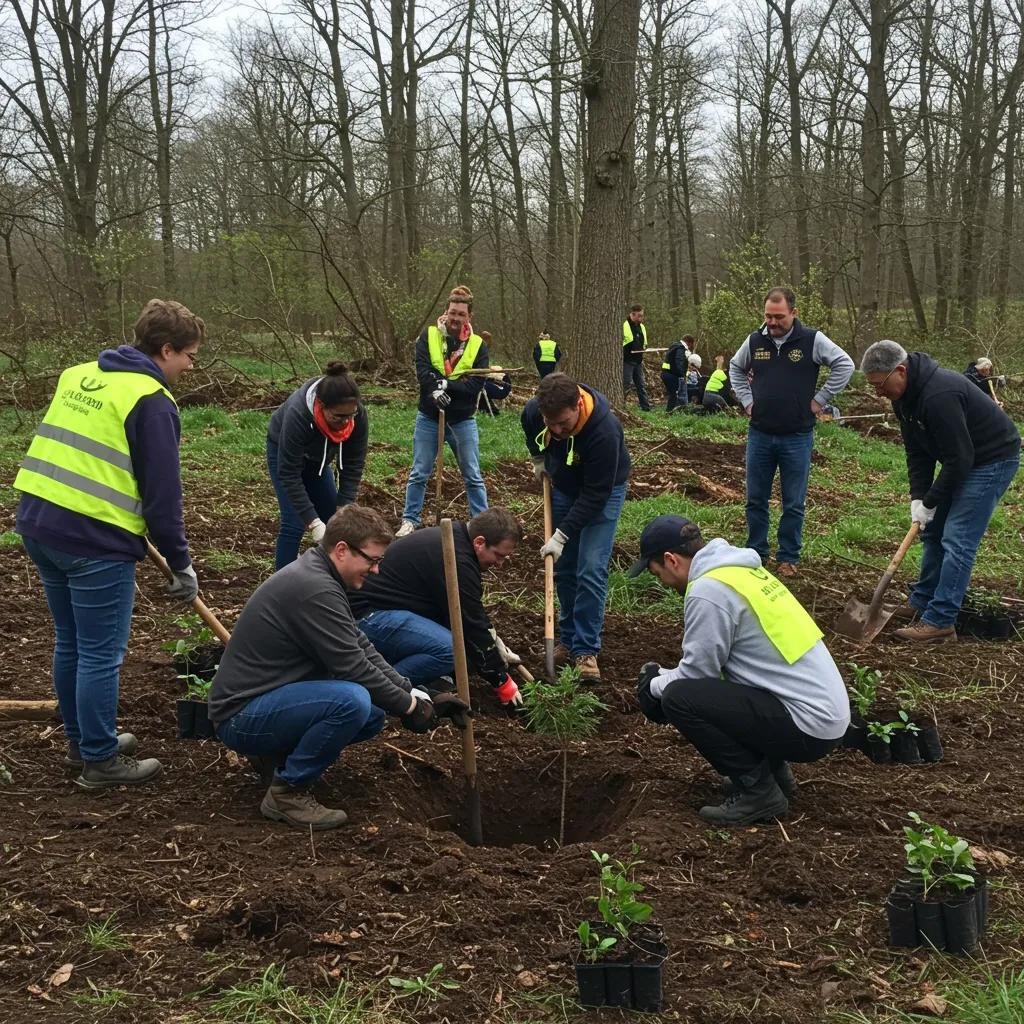
Volunteer roles at DeBary planting events range from light tasks like distribution and mulching to more physical roles such as digging holes and installing stakes, with shift lengths that suit individuals, families, and community groups. Typical volunteer shifts last two to four hours and include roles for site preparation, planting teams, safety monitors, and post-planting watering crews; organizers often provide gloves, brief training, and supervision. Volunteers gain practical skills in tree handling and care, earn community recognition, and help ensure higher survival rates for planted trees. If you intend to volunteer, expect to register in advance, bring sunscreen and water, and follow posted safety protocols; the next H2 explains why that volunteer contribution matters for DeBary’s environment and economy.
Tree Distribution Programs: Strategies for Private Land
This paper describes the operations of five tree distribution programs, also known as tree giveaway programs. These organizations focused their tree distribution efforts on private lands, and their strategies included outreach to homeowners, partnerships with local governments and community groups, and the provision of educational materials on tree care. The programs aimed to increase urban tree canopy, improve environmental quality, and enhance community aesthetics.
Branching out to residential lands: Missions and strategies of five tree distribution programs in the US, VD Nguyen, 2017
Why Should You Participate in Tree Planting Programs in DeBary?
Participating in DeBary’s tree planting programs delivers measurable environmental, social, and economic benefits by increasing canopy cover, improving stormwater management, and strengthening community ties. Trees intercept rainfall, reduce runoff that stresses local drainage systems, and cool streets and homes through shading and evapotranspiration, which lowers energy demand in summer months. Socially, planting events create opportunities for civic engagement, environmental education, and neighborhood improvement while boosting property aesthetics and long-term valuation. For homeowners and volunteers, involvement translates into healthier neighborhoods and a direct stake in urban forestry outcomes that protect community resilience.
How Do Tree Planting Programs Improve DeBary’s Environment and Community?
Tree planting programs improve DeBary’s environment by increasing canopy cover that filters pollutants, stabilizes soils, and supports local biodiversity through habitat provision for birds and pollinators. The mechanistic benefits include canopy interception of rainfall, root-zone infiltration that slows runoff, and shading that reduces surface temperatures—each contributing to cleaner water and cooler microclimates. Community programs also build social capital: volunteers learn stewardship skills, connect with neighbors, and participate in civic restoration that enhances public spaces. These combined environmental and social outcomes create a positive feedback loop where healthier urban ecosystems invite further investment and conservation by residents.
What Are the Economic and Property Value Benefits of Planting Trees in DeBary?
Planting trees produces economic returns by reducing energy costs, lowering stormwater mitigation expenses, and improving curb appeal that can increase property values over time. Shade-providing trees reduce air-conditioning needs in summer, and strategically placed windbreaks can lower heating and cooling loads; at the parcel level, mature trees often correlate with higher sale prices and faster marketability. At the community scale, greater canopy cover can reduce infrastructure stress and maintenance costs associated with runoff and heat-related pavement damage. Homeowners who participate in planting programs therefore contribute to neighborhood attractiveness and household cost savings that accrue across years as trees mature.
How Do Trees Help Manage Stormwater and Reduce Urban Heat in DeBary?
Trees manage stormwater by intercepting precipitation in their canopies, promoting infiltration through root systems, and slowing surface flow that would otherwise burden drains and retention basins. Evapotranspiration from trees also removes water from the system, while root mats increase soil porosity and reduce erosion—practical mechanisms that lower peak runoff during storms common in the region. In terms of heat mitigation, canopy shading decreases solar radiation on roofs and pavements, and shaded surfaces combined with cooler canopy air can reduce urban heat island effects locally. Homeowners can maximize these benefits by prioritizing canopy-forming species near impervious surfaces and maintaining healthy root zones to support infiltration.
The Role of Trees in Urban Stormwater Management
Trees and other woody plants – deserves additional consideration as a stormwater control measure. The role of trees in urban stormwater management is significant, as they intercept rainfall, reduce runoff volume, and improve water quality. Effective management requires understanding the hydrological processes involved and developing appropriate institutional frameworks to maximize the stormwater benefits trees can provide.
The role of trees in urban stormwater management, A Berland, 2017
Which Trees Are Best for Planting in DeBary?
Choosing trees for DeBary should balance native species benefits, drought and salt tolerance, growth rate, and disease resistance to ensure long-term survival and ecosystem benefits. Native Florida species typically offer strong wildlife value and storm resilience, while popular giveaway trees like Crepe Myrtle provide attractive blooms and low maintenance needs for urban yards. Selection criteria should emphasize species adapted to local soils, resistance to common pests, and appropriate mature size relative to planting sites. Below is a compact EAV-style table comparing several recommended species to help homeowners choose the best fit for their property and goals.
Different species vary in water needs, salt tolerance, growth rate, and disease resistance—this table summarizes practical attributes for DeBary plantings.
| Tree Species | Water Needs | Salt Tolerance | Growth Rate | Disease Resistance |
|---|---|---|---|---|
| Live Oak (Quercus virginiana) | Medium | Medium | Slow to Moderate | High |
| Southern Red Maple (Acer rubrum) | Medium-High | Low | Moderate | Medium |
| Bald Cypress (Taxodium distichum) | High (wet sites) | Medium | Moderate | High |
| Crepe Myrtle (Lagerstroemia indica) | Low-Medium | Medium | Fast | Medium |
| Sand Live Oak (Quercus geminata) | Low | High | Slow | High |
This comparison highlights species suited to different site conditions and homeowner priorities, steering selections toward durable, low-maintenance choices for DeBary neighborhoods.
What Native Florida Tree Species Thrive in DeBary’s Climate?
Native species that thrive in DeBary include canopy trees such as Live Oak and Sand Live Oak, which tolerate local soils and provide valuable wildlife habitat and long-term canopy structure. Bald Cypress is an excellent choice for wetter sites and stormwater-adjacent plantings due to its tolerance for periodic inundation and strong root stability. Southern Red Maple offers fast canopy development in suitable soils but requires attention to site moisture and planting depth for best performance. Selecting native species supports pollinators and bird populations and reduces long-term maintenance needs because these trees are adapted to regional climatic patterns and soil chemistry.
How to Choose Disease-Resistant Trees for DeBary Planting Programs?
Selecting disease-resistant trees involves checking cultivar susceptibility, prioritizing species with proven local performance, and avoiding varieties known for recurring pest or fungal issues in the region. Red flags include species with documented susceptibility to scale insects, fungal leaf spots, or root-rotting pathogens in local extension reports; homeowners should consult University of Florida IFAS guidance when possible. Choosing resistant cultivars and proper rootstock, ensuring good planting technique, and planning for routine inspections reduce long-term disease risk. Program organizers should favor resilient selections to improve survival rates and minimize follow-up maintenance needs for volunteers and homeowners.
Why Are Crepe Myrtle Trees Popular in DeBary’s Tree Giveaways?
Crepe Myrtle trees are common in giveaways because they are adaptable, provide long seasonal floral display, and establish quickly in urban yards with minimal maintenance. Their relative drought tolerance, variety of sizes, and ability to tolerate pruning for clearance make them practical for distribution in community programs. Crepe Myrtles also offer rapid aesthetic payoff—blooming colors and manageable canopy form—that encourages homeowner enthusiasm and stewardship. Organizers choose them frequently as mass-distributed saplings because they combine low initial care demands with visible landscape benefits that boost participation and planting success.
How to Plant and Care for Trees in DeBary: A Homeowner’s Step-by-Step Guide
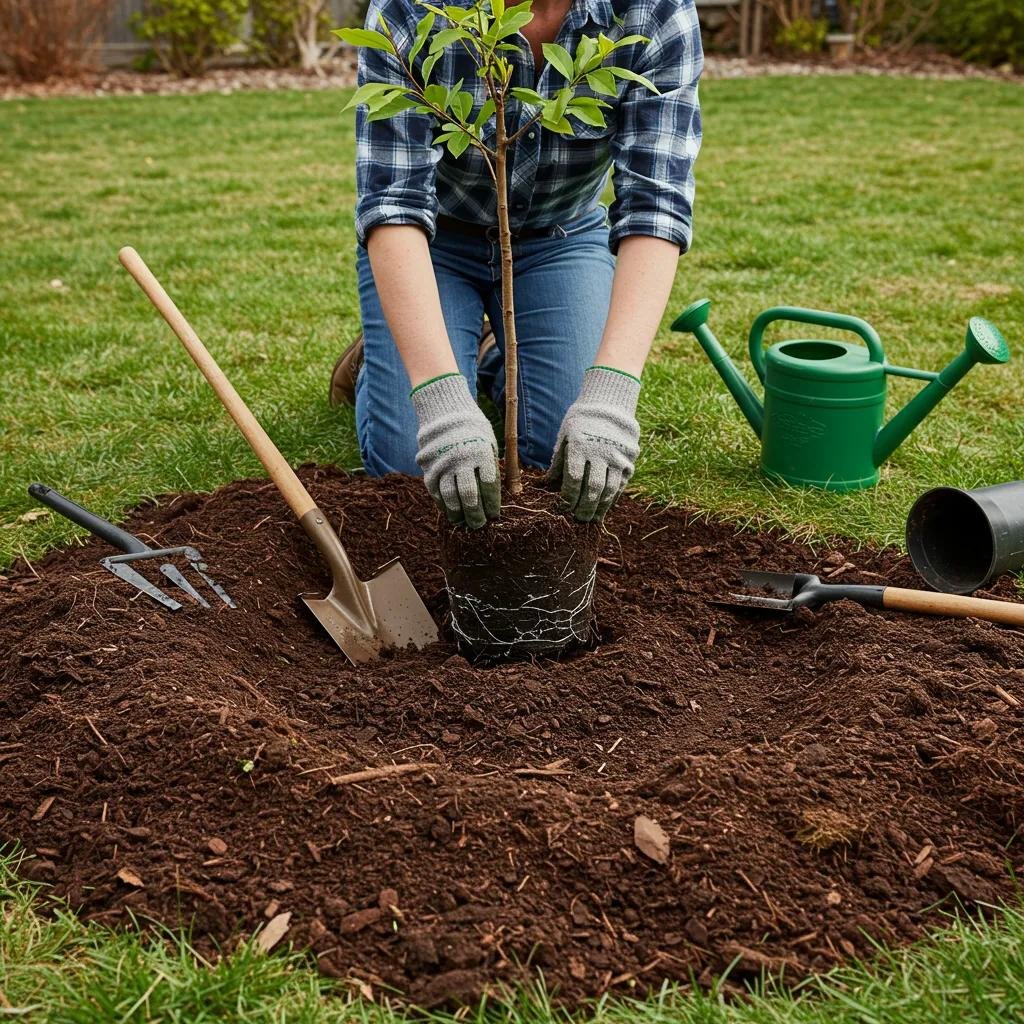
Effective planting and early care determine whether a new tree will thrive; homeowners should use proper hole preparation, correct planting depth, and an initial care plan that includes watering, mulching, and monitoring.
Good planting sites avoid utility conflicts and hardscapes while providing sufficient root room and appropriate exposure for the species chosen. Post-planting practices—regular, measured watering, a mulch ring to conserve moisture, and judicious staking—support root establishment during the critical first two to three years.
The following EAV-style table condenses planting steps into a scannable checklist with tools and timing to guide homeowners and volunteers.
| Planting Step | Tools / Materials Needed | Best Practice / Timing |
|---|---|---|
| Site selection | Tape measure, utility locate | Choose space considering mature canopy; call utility locate before digging |
| Digging the hole | Shovels, tamping tool | Make hole 2–3 times root ball width; avoid deep planting |
| Root handling | Gloves, pruning shears | Gently loosen circling roots; position root flare at grade |
| Mulch application | Organic mulch | Apply 2–3 inch mulch ring, keep mulch away from trunk |
| Initial staking | Stakes, straps | Stake only if necessary for first 1–2 seasons and remove after roots establish |
This concise checklist helps volunteers and homeowners perform each step efficiently and with the timing needed for higher survival rates; the next subsection covers specific local best practices for DeBary soil and climate.
What Are the Best Practices for Planting Trees in DeBary’s Soil and Climate?
Best practices for DeBary planting emphasize correct planting depth, minimal soil amendment, and attention to drainage and utility clearances to match regional rainfall and soil texture. Homeowners should expose the root flare at grade, avoid deep backfilling that suffocates roots, and reserve heavy soil amendments for cases where soil tests indicate severe deficiencies. For many native-friendly plantings, mixing a limited amount of organic matter and establishing a mulch ring support moisture retention while encouraging roots to extend into native soil. Proper site selection also accounts for stormwater pathways and wind exposure to reduce early failure during seasonal storms.
How Should You Water, Mulch, and Protect Newly Planted Trees?
Newly planted trees require a structured watering plan that balances frequent shallow watering immediately after planting with progressively deeper, less frequent irrigation as roots establish. A practical rule is to water slowly to saturate the root ball and surrounding root zone, then adjust frequency based on rainfall and soil moisture; a moisture probe or simple finger test can guide decisions. Mulch should be applied in a 2–3 inch ring, leaving a clear space at the trunk to prevent rot, and protective guards or low fencing can prevent mechanical damage from lawn equipment or pets. Monitoring for pests, girdling roots, and trunk injury during the first three years allows early intervention and improves long-term vigor.
When Should You Contact Professional Tree Care Services in DeBary?
Contact professional tree care when a planting involves large container or balled-and-burlapped trees, complex site constraints near utilities or structures, visible root damage, or signs of disease and structural defects that surpass volunteer capacity. Professional services like pruning for structural establishment, stump grinding for replanting sites, emergency storm response, and in-depth tree health assessments are appropriate when safety or specialized equipment is required. For complex plantings or persistent problems, Tree Service Near Me LLC (operating in the local market under trade names referenced in community reports) and similar licensed providers can perform inspections, structural pruning, and corrective care to improve survival odds. If you face uncertainty about a tree’s stability or health, obtaining a professional inspection and written recommendations early prevents costly failures later.
How Can You Volunteer and Support Community Tree Planting Programs in DeBary?
Volunteer engagement ranges from single-event participation to ongoing stewardship roles that water, monitor, and care for plantings over multiple seasons, and there are clear ways individuals, clubs, and businesses can support program success. Groups can sponsor tree purchases, provide tools, or coordinate watering schedules with neighbors to increase survival rates for giveaway saplings. Training sessions and volunteer orientations often equip participants with safe planting techniques and post-planting care responsibilities that strengthen community capacity. Below are practical expectations for volunteers and suggestions for meaningful contributions that extend beyond a single planting day.
What Are the Requirements and Benefits of Volunteering for Tree Planting?
Volunteering typically requires basic fitness for light physical tasks, pre-registration to manage group sizes, and adherence to safety protocols provided by organizers; most events supply training, gloves, and supervision. Volunteers benefit from hands-on learning about tree care, the opportunity to earn community service hours, and the satisfaction of contributing to visible neighborhood improvements. Many programs recognize volunteers through certificates, local publicity, or follow-up events that celebrate planting milestones and survival success. By understanding the requirements and rewards, prospective volunteers can commit with realistic expectations and maximize their positive impact.
How Does Orlando Tree Removal Support DeBary’s Green Initiatives?
Orlando Tree Removal, referenced as a local professional partner in community reports and operating under trade names associated with Tree Service Near Me LLC, provides technical support and equipment that complements volunteer-driven planting programs. The company’s contribution often includes arborist consultations, tree health assessments, and mechanized assistance such as stump grinding or land clearing when sites require preparation beyond volunteer capability. Organizers and homeowners can request limited technical assistance or event support from this provider to ensure proper planting sites, post-planting structural pruning, or follow-up maintenance; such partnerships bridge grassroots efforts and professional expertise. This cooperative model keeps volunteer programs focused on engagement while ensuring complex tree care needs receive qualified attention.
Where Can You Find Upcoming Tree Planting Events and Volunteer Sign-Ups?
Authoritative event listings appear on municipal calendars, nonprofit organization pages, and community event platforms, and interested volunteers should follow City of DeBary announcements and partner organizations for the most current schedules. Subscribing to local civic newsletters, following Community Greening and related groups, or contacting extension services helps volunteers find sign-up forms and event details. Organizers often post registration instructions, eligibility criteria for giveaways, and volunteer checklists ahead of events; preparing by reviewing these sources and registering early secures a spot on limited-shift rosters. Keeping a local calendar and setting reminders ensures you won’t miss seasonal opportunities like Arbor Day or neighborhood planting days.
What Resources and Services Support Tree Planting and Care in DeBary?
A network of professional services and community resources supports both initial plantings and long-term maintenance, including pruning, stump grinding, emergency response, and tree health assessments to protect your investment. These services align with homeowner needs after planting: structural pruning to develop strong form, stump removal for replanting space, and health diagnostics when pests or decline appear. The following EAV-style table maps common services to when to use them and the benefits they provide, offering homeowners a quick reference for deciding when professional help is appropriate.
| Service | When to Use | Benefit for Newly Planted Trees |
|---|---|---|
| Tree trimming / pruning | Yearly or as needed for structure | Promotes strong form and reduces branch failure |
| Stump grinding | After tree removal or to clear a planting site | Removes obstacles and reduces pest habitat |
| Tree health assessment | Suspected decline, pest activity, or after storm damage | Diagnoses issues and recommends targeted treatments |
| Emergency tree services | Storm damage, leaning trunks, or hazardous conditions | Ensures safety and stabilizes or removes hazardous trees |
This mapping shows how each professional service preserves tree health and homeowner investment; the next H3 explains trimming and stump grinding in more detail.
How Can Professional Tree Trimming and Stump Grinding Help Maintain New Trees?
Professional trimming supports young trees by removing competing leaders, correcting structural defects, and guiding branch spacing to reduce future failure risks, which is especially important for trees in streetscapes or near structures. Stump grinding eliminates regrowth, reduces pest harborage, and clears the site for safe replanting with minimal soil disturbance; this service helps maintain aesthetic continuity and lowers long-term maintenance burdens. Timing matters: early formative pruning within the first few years sets a tree up for longevity, while stump work is best scheduled before replanting to ensure proper soil preparation. Homeowners should consider periodic professional inspections to align maintenance timing with tree development stages.
What Tree Health Assessments Are Recommended After Planting?
Recommended assessments include an initial inspection within the first year to confirm root establishment and crown health, a follow-up at year three to check structural development, and periodic checks after storms or if symptoms of decline appear. Visual assessments evaluate leaf condition, trunk integrity, root flare visibility, and signs of pests or disease; more detailed diagnostics may include soil testing or laboratory analysis for pathogens. Scheduling assessments at these milestones catches problems early when corrective actions are more effective and less costly. If assessment results indicate intervention, homeowners can plan pruning, targeted treatments, or supplemental watering to restore vigor.
How to Access Emergency Tree Services Related to Newly Planted Trees?
When a newly planted tree poses an immediate safety hazard from storm damage, structural failure, or severe pest outbreak, homeowners should secure the area, document damage for insurance, and contact emergency tree professionals for rapid evaluation and mitigation. Immediate steps include keeping people and pets away from the site, taking photos for records, and postponing nonessential activities until a professional arrives to assess hazards. Emergency tree services provide hazard mitigation, temporary bracing, or safe removal if required, and they coordinate with homeowners on follow-up actions for replanting or stabilization. Having a vetted list of local service providers and understanding insurance documentation needs speeds resolution after urgent events.
What Are the Most Common Questions About Tree Planting Programs in DeBary?
Residents often ask when Arbor Day occurs locally, how to obtain free trees, and what long-term benefits they can expect from participation; direct, practical answers help people act quickly and confidently. Clear, short responses reduce uncertainty and improve participation rates by explaining eligibility, event mechanics, and post-planting care responsibilities. Below are concise answers to common questions designed for quick reference and to support featured-snippet style queries.
When Is Arbor Day Celebrated in DeBary and What Happens During the Event?
Arbor Day events in DeBary typically occur in the spring and feature tree giveaways, planting demonstrations, and educational booths focused on tree care and community forestry. Activities commonly include volunteer planting shifts, short workshops on species selection and mulching, and distribution logistics for saplings with guidelines for planting at home. Exact dates and registration procedures vary year to year and are announced by sponsoring organizations, so prospective participants should check official notices when planning. Attendees can expect to leave with a sapling or a chance to help plant in a public space while learning best practices for early care.
How Can Homeowners Get Free Trees Through DeBary’s Tree Planting Programs?
Homeowners can obtain free trees by registering for giveaway events, meeting eligibility criteria—such as residency or site suitability—and following pick-up or planting instructions provided by organizers. Registration typically requires advance RSVP and may include a short form to confirm planting intentions or show proof of residence; arriving prepared with transport and a planned planting site streamlines pickup. Organizers sometimes prioritize locations that increase canopy in underserved areas or public planting sites, so understanding program goals improves match rates. After receiving a free tree, homeowners should follow the planting and care guidance in this article to ensure long-term survival.
What Are the Long-Term Benefits of Participating in DeBary’s Tree Planting Initiatives?
Long-term benefits of participation include cumulative environmental improvements such as cleaner air, reduced runoff, and cooler neighborhoods, as well as social returns like stronger community networks and improved public spaces. Economically, increased canopy can raise property values, reduce energy costs through shade, and lower municipal infrastructure strain during storm events. Participation also builds local capacity for stewardship, producing volunteers with the skills to maintain and advocate for urban forestry projects. By committing to planting and ongoing care, residents help create a resilient, attractive community that yields measurable benefits across decades.